Which photos should I take after a car accident?
Generally, I get a call or an email letting me know the person has been in a car accident and would like to speak with a lawyer to discuss if they have a case. I conduct an initial interview to determine what happened, when it happened and where it happened. After determining it is a case, one I want to handle and that the client and I can work together, then I ask questions about what has already been done.
WHAT HAS BEEN DONE?
What has already been done, includes have any photographs been taken. Did the police take photos? You may or may not know. That is not a crime, but the question needs to be asked. Did relatives or friends take photographs? Did you take photographs? And, what has been done to gather and to preserve them? Your car is towed to the tow yard, people are curious about how bad it was, they go to the tow yard, take out their cell phones and snap a few pictures to post on Facebook, Instagram, X or whatever social media they use. But, for the most part, everyone assumes that some lawyer who has not yet been hired is preserving evidence. We do not preserve anything until we are hired, know that it exists or where to look and we do not normally get hired before the injured person is out of the hospital or maybe still in the hospital, but not fully aware of what has been done to gather and to preserve the evidence. And so here I am talking to the injured person or a friend or relative and I start asking questions.
PHOTOGRAPH THE CAR, TRUCK, SCENE & THE INJURIES
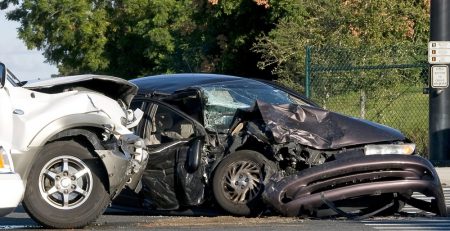
And so, I ask about photographs of the accident scene, the vehicles involved, any fixed property that was damaged, injuries to the person, bruises, cuts, lacerations, clothing and any personal property that was lost or damaged. Most people never think about the car’s interior. Was there an injury to the skull, the face or some other sensitive part of the body? Inside the car are their signs of impact between sharp edges, pinch points and human tissue? Did anyone take photographs of hair follicles stuck in the rearview mirror or the shattered windshield? Anyone can see the forehead was bleeding, but not everyone thinks about how to prove what it hit and how hard. Where is the car? The truck? Is it at a junkyard or an auction yard? The insurance company has a property adjuster whose only job is to destroy the evidence that you need. Yeah, maybe not intentionally, but that is the system they set up.
EVIDENCE DECAYS AND THEN DISAPPEARS
And while you are lying in some hospital bed trying to do nothing more than to stop hurting, those lacerations, cuts and bruises are healing. The physical evidence is not being preserved; at least not by me; and certainly not by the adjuster for the other guy.
THE BIG LIE
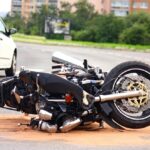
The idea that what I do is chase ambulances is a carefully crafted fallacy intended to make you feel and think badly about preserving the evidence you will later need to prove your case. It is complete hogwash, but the people fall for it. It does not bother me, I just go about doing my job.
GATHER AND PRESERVE THE EVIDENCE, RINSE AND REPEAT
When I was a law student, I noticed a 3×5 index card on the wall offering summer work as a private investigator. I applied and was hired. Instead of clerking for a judge or writing briefs for big law firms I worked as a private investigator gathering and preserving evidence. I interviewed people, hundreds of witnesses and others with relevant information that helped to prove hundreds of cases. I took photographs, lots of photographs. Shot video footage. Measured things. Ran around in a conversion van with a periscope peaking out from the roof. Ran down physical evidence before it was destroyed. Took photographs and measured skid marks on the road surface. I did surveillance. It was an interesting job that taught me a lot about what an Iowa personal injury lawyer would need to prove his clients’ cases.
A FIRE ALONG I-80
I remember investigating an accident on I-80 west of West Des Moines. A train without spark arrestors started grass fires on the south side of I-80. The smoke consumed the interstate, blinding drivers. Not knowing what was ahead, some drivers stopped on the interstate; only to be rear ended by semis’ causing a massive multi-vehicle collision scene. People died. At one point, in the early evening I ended up sitting in a farmer’s kitchen interviewing a young lady about her experience of being a passenger in an involved car. I asked her a single question that turned the case. It is a question that I would ask a thousand time. “Do you know of any other witnesses?” She did and her father who was sitting at the table drinking a cup of coffee, and who worked for the DOT was on the overpass watching the entire accident scene develop. He ended up being a key witness. I still think about leaving the practice of law as an attorney to be a private investigator. Who knows, maybe I will someday.

CONTACT STEVE LOMBARDI
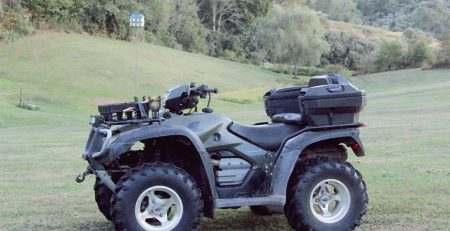
This blog will give you a general idea about which photographs to take, but not all and that is because every case is different and requires different photographs. Your case is different, mine too. Everyone’s case is different. A car, a truck, an ATV, a UTV, a motorcycle, a moped, an electric scooter, a bicycle, a pedestrian, a semi-truck, something slick on the road’s surface, a malfunctioning light, an untrimmed branch that hid the stop sign or stop light. Many things can cause an accident, but speed is by far the most prevalent.